
LOVE IS THE BIGGEST PSYCHOLOGICAL SCAM
Love Is the Biggest Psychological Scam Ever Sold
Deconstruct the illusion of love. From dopamine loops to projection, discover the psychological mechanisms behind romance and why it feels so undeniably real.

The Illusion of Certainty
Love is frequently treated as the ultimate truth, the most authentic human experience possible. People trust it more than logic, more than evidence, and sometimes even more than reality itself. An individual can meet a complete stranger and feel “certain” they have found their life partner. No data. No shared history. No proof. Just a feeling—and that feeling is sufficient to make life-altering decisions.
This level of implicit trust warrants a deeper examination.
Most people look for evidence to support a feeling, but in love, the feeling is the evidence. We use our emotions as proof of truth.
The Neuroscience: Love Is a Chemical State
In most professional and logical areas of life, certainty requires evidence. However, in the realm of romance, certainty often appears before true understanding. So, what exactly is love? Not the poetic version found in sonnets, nor the cinematic illusion portrayed on screen. What is the actual mechanism behind what people call “love”?
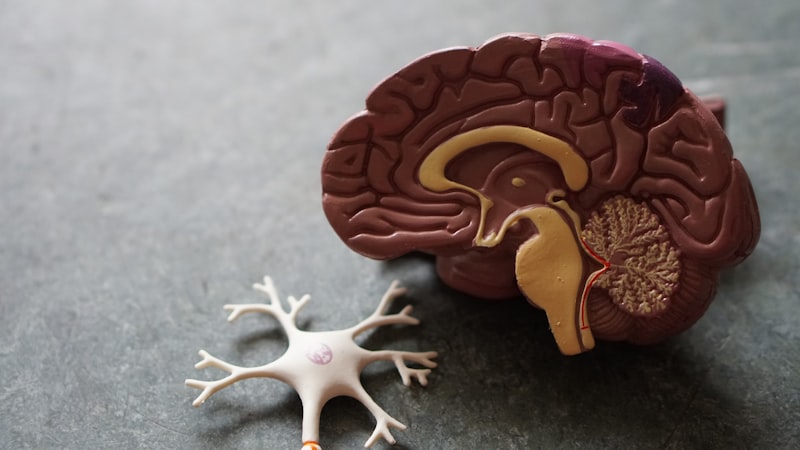
When you strip away the emotion and examine the experience through the lenses of psychology, neuroscience, and behavioral science, love begins to look less like magic—and more like a highly sophisticated biological system.
1. The Dopamine, Oxytocin, and Serotonin Loop
What people describe as “deep love” often begins with a distinct surge of neurochemicals.
- Dopamine: Levels increase sharply, creating intense desire and motivation. This is the same chemical integral to addiction. It doesn’t just make you feel good—it makes you crave more of whatever triggered it.
- Oxytocin: Often colloquially known as the bonding hormone. It is released during physical touch, sustained eye contact, and intimacy, reinforcing the feeling of connection.
- Serotonin: Levels tend to drop during the early stages of attraction. Interestingly, this drop creates obsessive thinking. The person occupies your thoughts constantly not because they are objectively extraordinary, but because your brain has reduced its ability to regulate focus on anything else.
This potent combination produces a powerful illusion: certainty. You don’t simply like the person—you feel as though they are uniquely important to your existence.
This feeling is not evidence of long-term compatibility. It is evidence of activation in your brain’s reward system. Your brain is not attempting to tell you the “truth”; it is attempting to lock your attention onto a specific individual.
The Psychology: Love Is Often a Projection
Most people operate under the belief that they fall in love with a person as they truly are. However, psychological research suggests this is rarely the case. Instead, individuals project their internal needs, desires, and unresolved emotional patterns onto others.

For instance, if someone grew up lacking validation, they may feel an intense, magnetic attachment to anyone who provides consistent attention. If someone has a deep-seated fear of abandonment, they may interpret emotional volatility as “passion” or “depth,” even when the relationship is unstable.
If someone struggles with low self-worth, they may feel drawn to partners who temporarily elevate their status or make them feel significant.
In all these scenarios, the feeling of love is genuine—but the perception is distorted. The partner is not being seen clearly; they are being filtered through the lens of the observer’s unmet needs.
This mechanism explains why people often claim, “They changed,” when relationships fail. In many cases, the person did not change; the projection simply faded, revealing reality.
The Behavioral Psychology: Love Is Reinforcement and Habit Formation
From a behavioral perspective, love can be understood as a sophisticated pattern of reinforcement. Every time a partner provides attention, affection, or validation, your brain registers this interaction as a reward.
Over time, the brain begins to associate that specific individual with positive emotional outcomes. This creates a classical loop:
- Cue: You see or think about the person.
- Behavior: You engage with them (text, call, meet).
- Reward: You feel a rush of positive emotion.
The more this loop repeats, the stronger the neural association becomes. Eventually, the mere presence of that person is enough to trigger an emotional response. This is not random fate; it is conditioning. And this conditioning becomes even more powerful when the reinforcement is inconsistent.
If a partner is sometimes affectionate and sometimes distant, your brain works harder to “win” their attention. This pattern, known in psychology as intermittent reinforcement, is one of the most robust forms of behavioral conditioning.
It is the same psychological principle that drives gambling addiction. This explains why people often remain attached to relationships that are objectively unhealthy. They are not just emotionally involved; they are behaviorally conditioned.
The Sociology: Love Is a Script You Were Taught to Follow
Your beliefs about love are not entirely your own. They have been shaped over a lifetime by culture, media, and social expectations. From a young age, humans are exposed to specific narratives about romance:
The “Hollywood” Script

- There is “the one” specific person meant for you.
- True love should feel intense, constant, and effortless.
- If it is real, it will last forever without effort.
- Grand sacrifice is the ultimate proof of commitment.
These ideas are repeated in movies, music, literature, and social media until they feel like universal truths. However, when you examine different cultures across history, you find that definitions of love vary wildly.
In some societies, love is viewed as a gradual partnership built over decades. In others, it is not considered a prerequisite for marriage at all. This suggests something important: Love, as most modern people understand it, is not purely biological; it is partly constructed. Your expectations of how love should feel and look are heavily influenced by external narratives.
Therefore, when someone says, “This feels like real love,” they are often measuring their experience against a script they did not consciously choose.
🧠 Understand the Mechanism
Join 8,000+ readers getting weekly insights on psychology, behavior, and emotional intelligence.
The Evolutionary Psychology: Love Is a Survival Strategy
From an evolutionary perspective, love is not designed to make you happy; it is designed to ensure the survival of the species. Human offspring require an exceptionally long period of care. Unlike many other mammals, human children cannot survive independently for years.

This biological reality creates a critical need for stable bonding between caregivers. Love, in this context, functions as a mechanism to keep individuals connected long enough to raise offspring successfully.
Attachment, dependency, and emotional bonding all serve this survival function. Even the pain of separation has a utility: it discourages individuals from breaking bonds that could threaten the survival of their genetic line.
This is why rejection or heartbreak can feel disproportionately intense, physically painful even. Your brain interprets the loss not just as emotional sadness, but as a potential threat to survival.
So when someone says, “I can’t live without you,” it may feel poetic. However, at a deeper level, it reflects a biological system designed to maintain connection for survival.
The Illusion of Uniqueness: Why Love Feels So Special
One of the most powerful aspects of love is the conviction that it is unique. People believe their connection is different from all others in history—that their specific experience cannot be replicated.

But when you analyze the mechanisms involved—chemicals, conditioning, projections, and cultural scripts—you begin to see predictable patterns. Different faces, different names, but the same underlying processes.
This does not mean the experience is fake. It means the experience is constructed. The intensity, the attachment, the sense of profound meaning—all of it emerges from systems that operate in highly predictable ways.
What feels rare is often reproducible under the right psychological conditions.
A Common Misconception: “Love Is Pure and Selfless”

Many believe love is selfless—that it is about caring for another person without any personal gain. However, psychological analysis suggests that most forms of love involve significant self-interest.
Not in a malicious or selfish way, but in a functional sense. People are drawn to partners who:
- Make them feel valued and seen.
- Reduce their sense of isolation and loneliness.
- Provide emotional stability and safety.
- Reinforce their identity and self-concept.
This does not invalidate the experience. But it challenges the romanticized idea that love is purely about the other person. Often, it is equally about how that person affects your internal state.
So, Is Love Fake?
No. Love is not fake. But it is not what most people think it is. It is not a mystical force that guarantees truth or compatibility. It is a complex interaction of:
- Brain chemistry (Dopamine, Oxytocin).
- Learned behavior and conditioning.
- Emotional history and attachment styles.
- Social influence and cultural scripts.
- Evolutionary design for survival.
Understanding this does not make love meaningless; it makes it clearer. Instead of blindly trusting a feeling, you begin to question it. You start to separate the raw emotion from the reality of the situation.
-
What you feel
The raw emotion, the rush, the intense attachment.
-
Why you feel it
The biological and psychological triggers behind the emotion.
-
Whether it aligns with reality
Is the person actually who you think they are, or are you seeing a projection?
“All of this creates an experience that feels undeniable. But feeling certain does not mean being correct. The real shift happens when you stop asking, ‘Do I feel love?’ And start asking, ‘What is creating this feeling?’ Because once you understand the mechanism, you gain something most people never have: Control.”
 Psychology
The Shocking Effects of Social Media on Youth
Dive deep into the psychological impact of social media on the developing brain.
 EQ Guide
Master Emotional Intelligence: A Step-by-Step Guide
A practical roadmap to understanding and managing your emotions effectively.
 Personality
Phlegmatic Personality: Traits, Strengths & Guide
Why the calm temperament is the anchor of stability in relationships.
